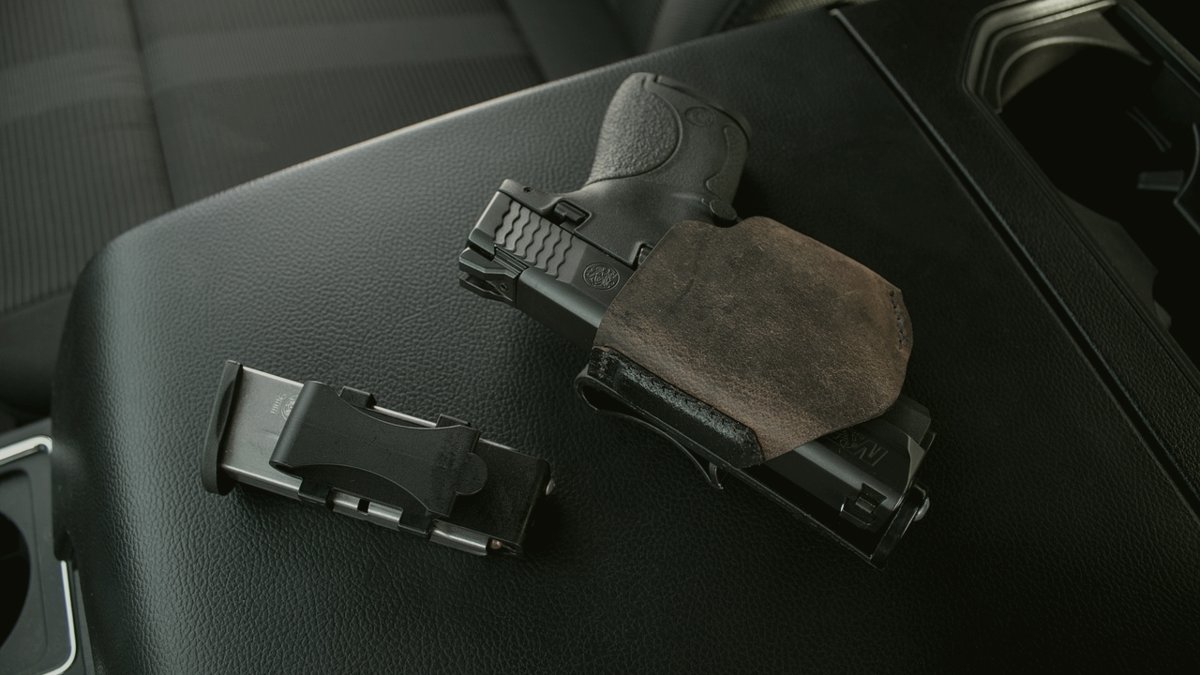
The industry has decided: every new pistol ships optics-ready. Whether the optic is worth it for you comes down to one honest question. Here’s both sides, straight.
Slide-mounted red dots went from race-gun novelty to industry default in about a decade. Police agencies issue them. Trainers teach them. Every flagship pistol now ships with a milled slide.
That momentum convinces a lot of buyers the question is settled. It isn’t — not for a carry gun, and not for every shooter. Here’s the honest ledger.
What the dot genuinely does better
One focal plane. Iron sights demand a three-object alignment — rear notch, front post, target — with your focus on the front sight while the threat blurs. A dot puts the aiming point and the target in the same plane: look at the threat, see the dot, press. That’s not a gimmick; it’s a real simplification of the hardest visual task in pistol shooting, and it’s exactly what your eyes want to do under stress anyway.
Precision at distance. Past ten yards, dots flatly outshoot irons for most people. Smaller aiming point, no alignment error stacking.
Aging eyes. This one’s underrated. If your forties have made the front sight a blur, the dot hands you back a crisp aiming point. For a lot of over-45 shooters this single factor decides the question.
Low light. An illuminated dot beats night sights in almost every lighting condition that matters.
What it costs you
The learning curve is real. The classic failure: draw, and the dot isn’t in the window. Finding it requires a consistent presentation — which is a training problem measured in weeks of dry fire, not an afternoon. Until that work is done, the dot is slower than the irons it replaced. The shooters who hate dots are mostly shooters who skipped this part.
It roughly doubles the buy-in. A dot worth trusting runs $300–$500 on top of the pistol, plus milling if your slide isn’t cut, plus a new holster. Budget dots exist, and a dot that loses zero when bumped is worse than no dot at all — this is one of the few places where the cheap option is genuinely the wrong option.
It’s a battery and an electronic on a defensive tool. Quality units run years on a battery and survive hard use, and you keep backup irons co-witnessed behind the glass. The risk is manageable — but it’s a maintenance habit irons never asked of you. Battery changes go on the calendar, not on memory.
Get the next one
Plain advice on guns, gear, and staying ready. One email when we publish. No spam, no selling your address.
The one question that decides it
Will you put in the presentation reps?
That’s the whole fork. If you’ll dry fire the draw a few minutes, a few nights a week, for a month or two — the dot will make you measurably better, and the advantages compound from there. If your honest training plan is a range trip or two a year, the dot is an expensive way to get slower, and good irons or night sights will serve you better.
Note what the question isn’t: it isn’t about the gear. The dot works. The question is whether you’ll do the work that makes it work. (The training itself is free — here’s the dry fire routine.)
If you go for it
Buy a duty-proven optic from a maker with a track record, not the $89 special. Keep backup irons. Zero it properly, then dry fire the presentation until the dot shows up on its own. Expect two frustrating weeks; they end.
Bottom line
The red dot is a genuine upgrade priced in training time. Pay the price and it’s worth every penny — especially past ten yards, in bad light, or with aging eyes. Don’t pay it, and irons remain what they’ve always been: completely adequate and fully paid for.
Skip this: the no-name dot. A failed or wandering optic on a defensive gun is worse than nothing, and the savings evaporate the first time it loses zero. If the budget doesn’t cover a proven unit, run irons happily until it does.