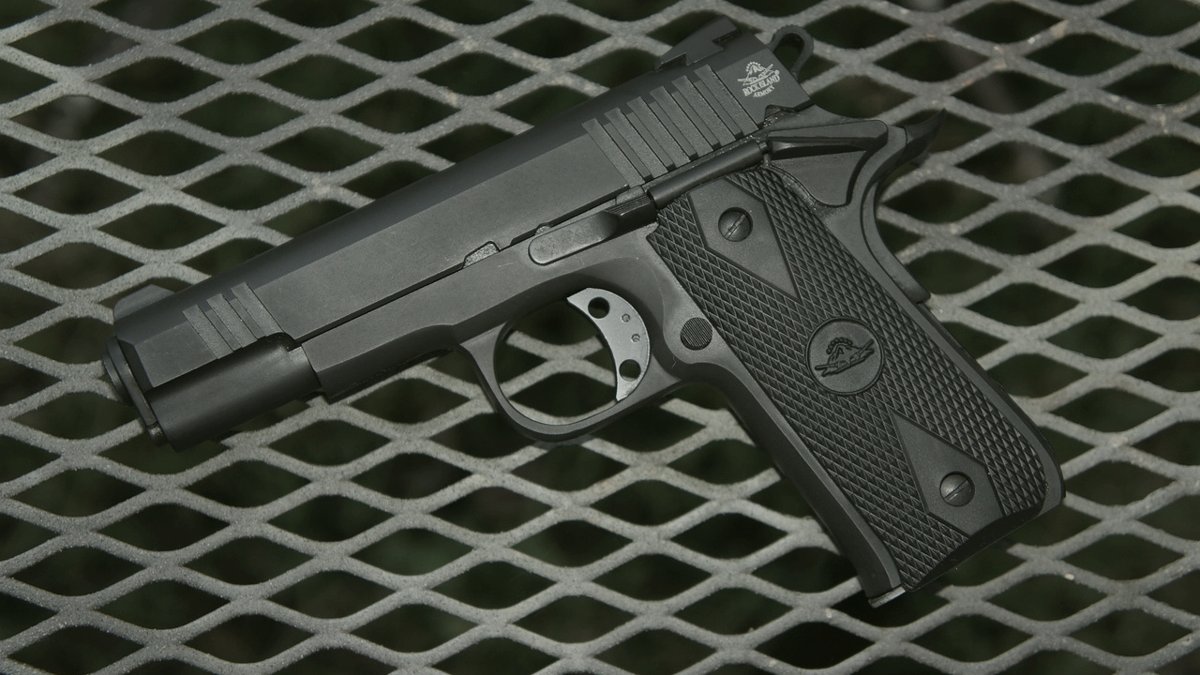
You can buy a rifle out of state. A handgun, you can’t — a 1968 rule most gun owners first discover standing at an out-of-state counter. The case trying to end it just took its next step.
Here’s a rule that surprises even experienced gun owners the first time it bites them.
You’re visiting family two states over. The local shop has the exact pistol you’ve hunted for a year, at a price your home shops won’t touch. You have your ID, you’ll pass the background check — and the dealer can’t sell it to you. Federal law, specifically the framework from the Gun Control Act of 1968, prohibits licensed dealers from selling handguns directly to residents of another state. Long guns, yes. Handguns, no — the dealer’s only legal move is shipping it to a licensed dealer in your home state, where you pay a transfer fee and start the paperwork there.
That rule is now squarely in front of the Fifth Circuit Court of Appeals.
The case: Elite Precision Customs v. ATF
The Firearms Policy Coalition, along with Texas dealer Elite Precision Customs and two individual members, is challenging the federal interstate handgun sales ban as unconstitutional. The district court upheld the ban; FPC appealed, and in early June filed its reply brief with the Fifth Circuit — the last major brief before the court hears argument. Shooting Industry’s roundup has the procedural summary.
The argument follows the post-Bruen playbook: under the Supreme Court’s history-and-tradition test, the government must show a historical analogue for banning handgun sales across state lines, and the plaintiffs contend there isn’t one — the rule dates to 1968, not to any founding-era tradition. The government’s defense leans on the law being a commercial regulation on dealers rather than a ban on keeping arms.
Why the rule exists at all
The 1968 framework was built in a world without instant background checks: Congress wanted every handgun funneled through a dealer in the buyer’s home state so local authorities and local law could attach to the sale. Whatever you think of the logic then, the plaintiffs’ practical point is that the world changed — the NICS background check a dealer runs today queries the same federal system in Amarillo as in Annapolis. The counterargument: state handgun laws still differ (waiting periods, permits-to-purchase, rosters), and the home-state-dealer rule is what makes them enforceable.
Get the next one
Plain advice on guns, gear, and staying ready. One email when we publish. No spam, no selling your address.
What changes if it wins — and what doesn’t
If the challenge ultimately succeeds, the practical change is simple: you could buy a handgun from a licensed dealer in any state the way you already can a rifle — background check at the counter, walk out (or comply with whatever your home state layers on). The transfer-fee round trip through a home-state FFL would stop being a federal requirement.
What it wouldn’t do: touch background checks (every dealer sale still runs NICS), override your home state’s own purchase laws, or change anything about private sales. This is narrower than both its fans and its critics tend to describe it.
Where it stands
Briefing at the Fifth Circuit is essentially complete; argument and a ruling come next, on the court’s schedule. Worth saying plainly: the ban is fully in effect today, and a dealer who sells you an out-of-state handgun while this case is pending is risking his license on your enthusiasm. The Fifth Circuit is historically the most receptive venue for this kind of challenge, and a plaintiffs’ win would set up exactly the kind of question the Supreme Court eventually has to answer — which, as with the Colorado magazine suit, means the realistic timeline is years.
Bottom line
The interstate handgun ban is one of the last 1968-era rules almost every gun owner trips over, and Elite Precision Customs v. ATF is the most serious run at it yet. Nothing has changed at the counter today — but this one is genuinely worth following, because the practical payoff for ordinary buyers is bigger than most cases that get ten times the coverage.
Skip this: any plan that involves “structuring” around the current rule — straw purchases and residency games are federal felonies that no pending lawsuit will retroactively fix. If the law changes, buy the pistol then.