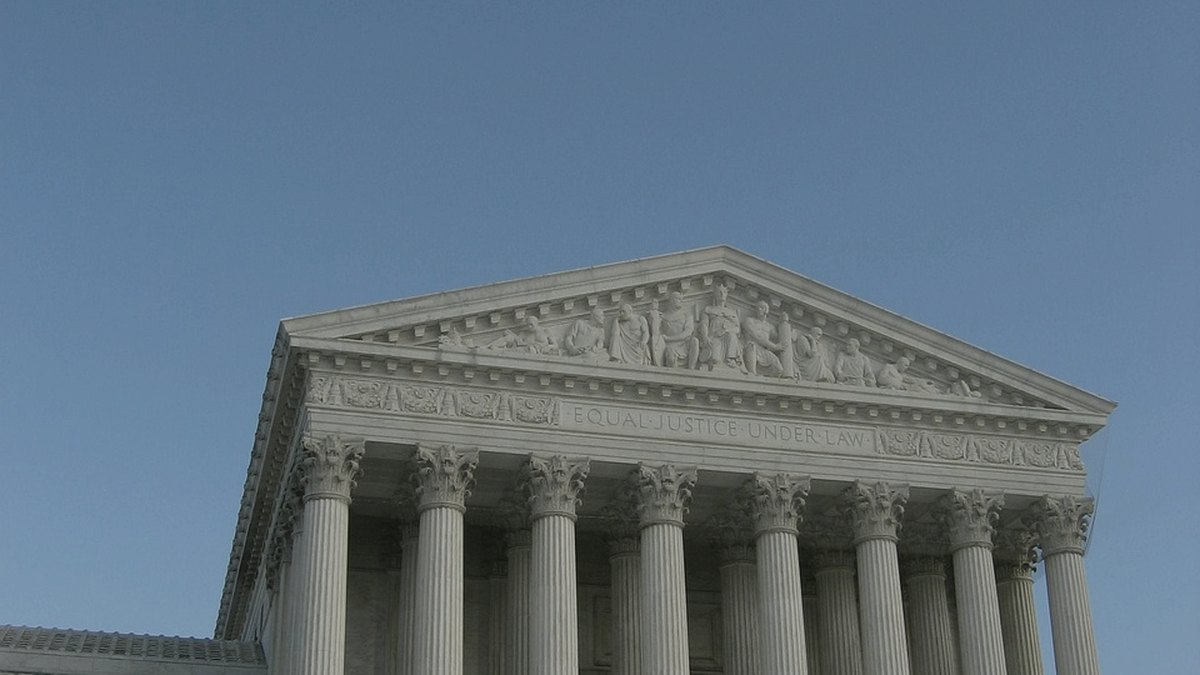
The Supreme Court wraps its term in late June, and two gun cases are still on the board. One could rewrite where you’re allowed to carry in five states. The other decides who loses gun rights automatically.
Every June, the Court clears its docket of the hard ones. This year, two of the hard ones are gun cases, and both have been hanging since the fall.
If you carry, or you live anywhere near the five states involved, here’s what’s coming and why it matters past the headline.
Wolford v. Lopez: who decides where you can carry?
In most of the country, the default works like this: you can carry on private property that’s open to the public unless the owner says otherwise. A “no guns” sign, a verbal ask, done. The owner’s call.
Five states — Hawaii, California, Maryland, New York, and New Jersey — flipped that default after Bruen forced them to issue carry permits. Under their laws, your permit is close to worthless unless each property owner grants you advance permission to carry there. No permission, and the grocery store, the gas station, and the parking lot are all off limits by default.
The question in Wolford is whether that flipped default violates the Second Amendment. Critics call these laws what they look like: a way to comply with Bruen on paper while making lawful carry impractical in daily life. You can hold a permit and still have nowhere legal to go.
If the Court strikes the permission-slip model down, carry in those five states starts to function like it does everywhere else. If the Court upholds it, expect more states to adopt it. That’s the real stake — not the five states, but the blueprint.
Get the next one
Plain advice on guns, gear, and staying ready. One email when we publish. No spam, no selling your address.
US v. Hemani: automatic disarmament, round two
The second case asks whether the federal law making it a felony for “unlawful users” of drugs to possess a gun — 18 U.S.C. § 922(g)(3) — violates the Second Amendment. It’s the same statute Hunter Biden was convicted under in connection with his 2018 firearm purchase, which is why you may have heard of it.
Strip away the politics and the legal question is the one courts keep wrestling with: can the government disarm a whole category of people automatically, without showing the individual in front of them is dangerous?
That question is bigger than drug users. Washington State just upheld stripping gun rights after two DUI convictions on exactly this kind of categorical logic. Whatever line the Supreme Court draws in Hemani, lower courts will apply it to every categorical ban on the books — and to the new ones legislatures keep writing.
Why the Court took these at all
Some background helps here. In 2022, Bruen announced that gun laws are unconstitutional unless they fit the nation’s historical tradition of firearm regulation. Lower courts have spent four years openly struggling with what that means in practice — which historical analogues count, how close the fit has to be, what to do with problems the founders never faced. Some judges have complained about the lack of guidance in barely polite terms. NPR’s term preview and Reuters both have good rundowns of where things stand.
These two cases are the Court’s chance to answer some of that. Wolford tests how far states can squeeze a right the Court already affirmed. Hemani tests how much “historical tradition” can justify automatic, category-wide disarmament.
We’ve already seen what happens in the gap while the rules stay fuzzy. The DOJ is in court over Colorado’s magazine ban, there’s a live challenge to the interstate handgun sales ban, and the Ninth Circuit just ruled suppressors aren’t protected arms at all. Every one of those fights turns on how Bruen gets read.
What to actually do with this
If you live in or travel through Hawaii, California, Maryland, New York, or New Jersey: watch Wolford closely, because the practical rules of where you can legally carry may change within weeks of the decision. Don’t act on a headline. The decision text and your state’s response are what matter, and states historically take their time complying.
Everyone else: Hemani is the one to watch. The categorical-ban question touches far more people than the drug-user statute does.
Bottom line
Two rulings due by the end of June: one on whether states can regulate lawful carry into uselessness, one on who can be disarmed automatically. We’ll break both down here when they drop, in terms of what changes for you rather than what it means for either party’s press releases.
Skip this: hot takes published the hour a ruling drops. Supreme Court gun decisions live in their footnotes and concurrences, and the first-day coverage reliably gets the scope wrong in both directions. Give it a day.