The industry has a thousand ways to spend your first-gun budget. Five things actually matter. Learn the difference before you’re standing at the counter.
Walk into a gun store as a first-time buyer and you’re the most profitable person in the building.
Not because anyone’s dishonest — most counter guys are straight shooters. But the industry around you runs on novelty: new models, new finishes, new “carry packages” with three accessories pre-installed. None of that is built around what a first gun is actually for, which is learning to shoot and, if needed, defending yourself.
Here’s what matters, in order.
What matters
1. A boring, proven track record. Your first gun should be a model that’s been on the market for years, sold in the hundreds of thousands, and fed every kind of ammo in every kind of hands. The big names you already know earn their place here. New releases get their bugs found by early adopters — don’t volunteer.
2. Fit in your hand. You should reach the trigger with the gun aligned to your forearm, and reach the controls without shifting your grip. No spec sheet shows this. Hold them. Better, rent them — an hour at a range that rents pistols is the highest-value money in this whole process.
3. 9mm. Cheapest centerfire round to practice with, fully credible for defense, softest recoil of the serious calibers in a midsize gun. The caliber debate is fun at dinner; at the counter it’s settled. (More on why in our ammo cost post.)
4. Midsize, not micro. The smallest guns are the hardest to shoot — snappy, short grips, tiny sights. A compact or midsize 9mm is dramatically easier to learn on and still concealable. Buy the micro later, when you have the skill to run it, if you still want it.
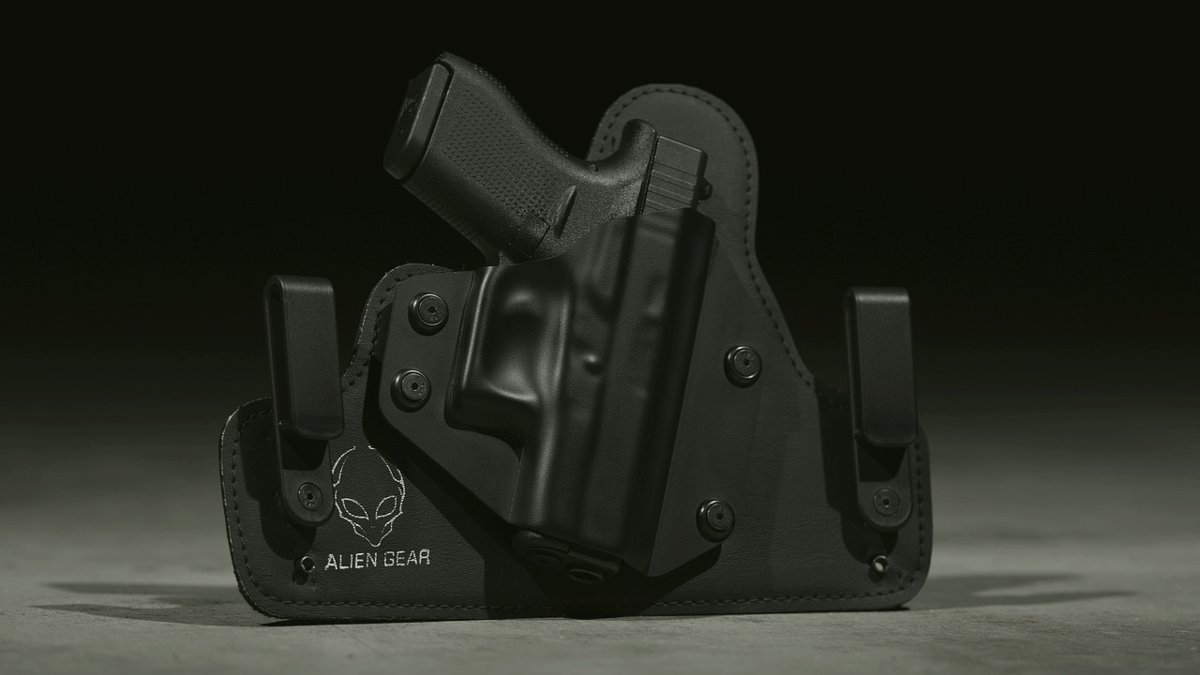
5. Budget for what comes after. The real price of your first handgun includes a quality holster, a quick-access safe, eye and ear protection, and several hundred rounds of practice ammo. If the gun itself takes the whole budget, buy a cheaper gun. A $450 pistol you’ve trained with beats an $800 pistol you can’t afford to shoot.
Get the next one
Plain advice on guns, gear, and staying ready. One email when we publish. No spam, no selling your address.
What’s marketing
Ported barrels and slide cuts. On a defensive pistol they add blast and cost and solve a problem you don’t have.
The pre-built “carry package.” A laser, a light, and a threaded barrel bundled onto a gun you haven’t learned yet. Accessories chosen by someone who’s never met you, at a markup.
Caliber one-upmanship. Anything that starts with “9mm is fine, but…” is a hobby conversation, not buying advice.
“Tactical” anything. The word on a box is a price adjustment, not a feature.
The newest micro-est model. Every year brings a smaller 9mm with a higher capacity, and every year it’s harder to shoot than the midsize gun beside it. Small guns are for people who already shoot well.
The buying process that works
Rent two or three proven midsize 9mms. Buy the one your hand likes. Spend the savings on a safe, a holster, ammo, and one basic pistol class — the class will do more for you than any upgrade on the wall. Then shoot the gun until it’s boring.
Bottom line
Proven model, fits your hand, 9mm, midsize, with budget left for training. That’s the whole formula. Everything else on the wall is the industry talking to itself.
Skip this: the upgrade aisle, entirely, for your first year. Triggers, optics, and match barrels improve a shooter who already has fundamentals. Until then they’re expensive decorations.