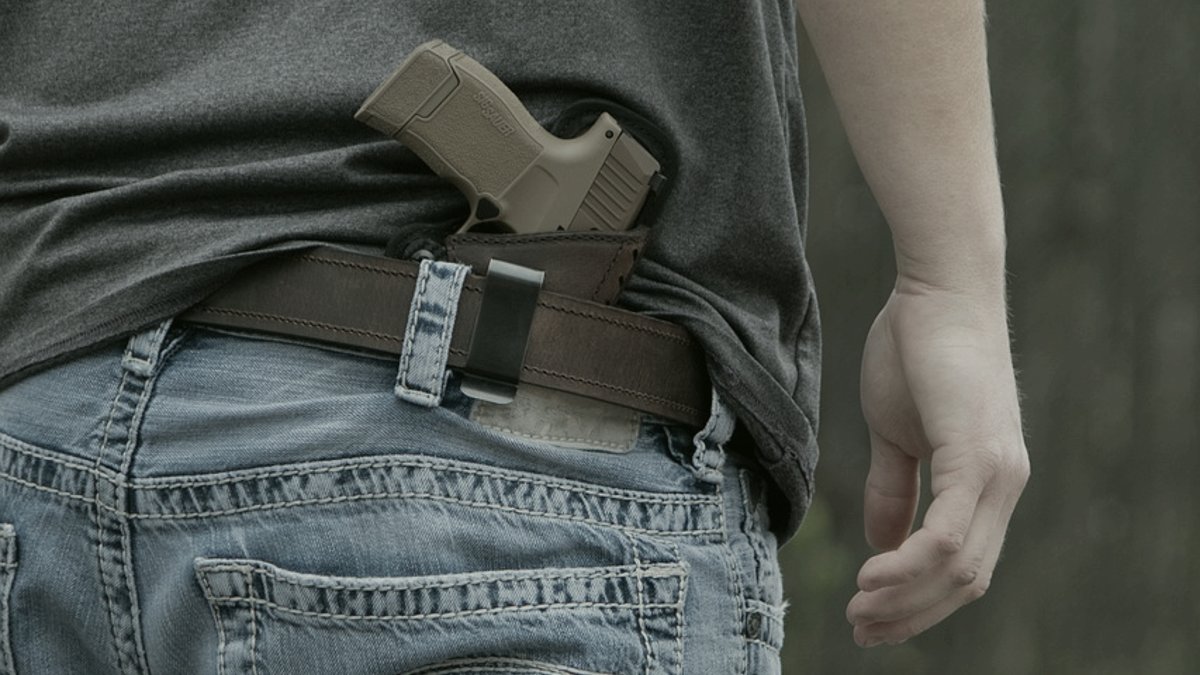
The holster is the most safety-critical piece of gear you’ll buy — and the place people cheap out first. Here are the designs that fail, the test that catches them, and what to buy instead.
Nobody brags about their holster.
Guys will research a pistol for a month, then carry it in a $15 nylon pouch from the impulse rack. That math is exactly backward. The holster touches the trigger guard of a loaded gun all day, every day. It is the most safety-critical purchase in your whole setup, and the failures are not hypothetical — holster-caused negligent discharges put people in emergency rooms every year.
Here’s what to avoid, and why.
The floppy universal nylon holster
The “fits most pistols” pouch. It fits every gun because it holds no gun: no retention, no rigid trigger coverage, and a mouth that collapses shut the moment you draw.
That collapsing mouth is the dangerous part. Reholstering one-handed becomes impossible, so people muzzle their own hand holding the holster open — or they push through soft fabric that can fold into the trigger guard. Soft material pressing a trigger during reholster is one of the classic negligent-discharge patterns. There is no gun this holster is right for.
Anything that leaves the trigger guard exposed
Minimalist clips, trigger-guard-only gimmicks worn loose, cheap leather that’s worn soft and open at the top edge. The rule has no exceptions: if any part of the trigger guard is reachable while holstered, the holster has failed. A modern pistol is drop-safe and carry-safe precisely as long as nothing can reach the trigger. The holster’s first job — before comfort, before speed — is making that true.
Aging leather deserves a special note: a leather holster that’s gone soft enough to fold at the mouth has retired itself, no matter what it cost new. Inspect yours twice a year.
Get the next one
Plain advice on guns, gear, and staying ready. One email when we publish. No spam, no selling your address.
Retention buttons that put your finger near the trigger
Some retention designs release with the index finger pressed against the holster body — which puts that finger, under draw-stroke tension, pointed at the trigger as the gun clears. Multiple training schools have banned these designs after students shot themselves in the leg, and the pattern repeats under stress and speed.
If you want active retention, choose a design released by the thumb — the thumb isn’t the finger that fires the gun. And practice any retention holster slow before you ever run it fast.
The belly band and pocket-without-a-holster setup
Elastic bands with no rigid trigger protection share the nylon pouch’s problems and add one: the gun migrates as you move. And a pistol loose in a pocket — no holster at all — is carrying a gun with keys, pens, and fabric folds for company, any one of which can find the trigger. Pocket carry is legitimate only with a rigid pocket holster that stays put when you draw.
What to buy instead
The boring, proven answer: a kydex or kydex-hybrid holster, molded for your exact gun model, from a reputable maker, paired with a real gun belt. Full trigger coverage, a mouth that stays open for a safe one-handed reholster, adjustable retention that clicks the gun home. Quality makers sell these in the $50–$100 range — less than a case of ammo, for the piece of gear that touches your trigger all day.
The four-point test for any holster: covers the whole trigger guard with rigid material; holds the gun upside-down without falling; mouth stays open one-handed; stays anchored to you when you draw. Fail any one, pass on it.
Bottom line
Rigid, gun-specific, full trigger coverage, reputable maker, real belt. One good holster costs less than the cheap drawer-full it replaces — and the drawer-full is the realistic alternative, because everyone buys junk until they learn this.
Skip this: the universal nylon pouch, exposed-trigger minimalist rigs, and finger-release retention. And skip “buy cheap to try the position” — a bad holster will make every position feel wrong and teach you nothing except not to carry. (Picking the position itself? That’s this post.)